
SPIRITUAL INSIGHTS INTO THE LIFE OF SAINT CALLISTUS I
October 14, 2026
Colossians 3:13
October 15, 2026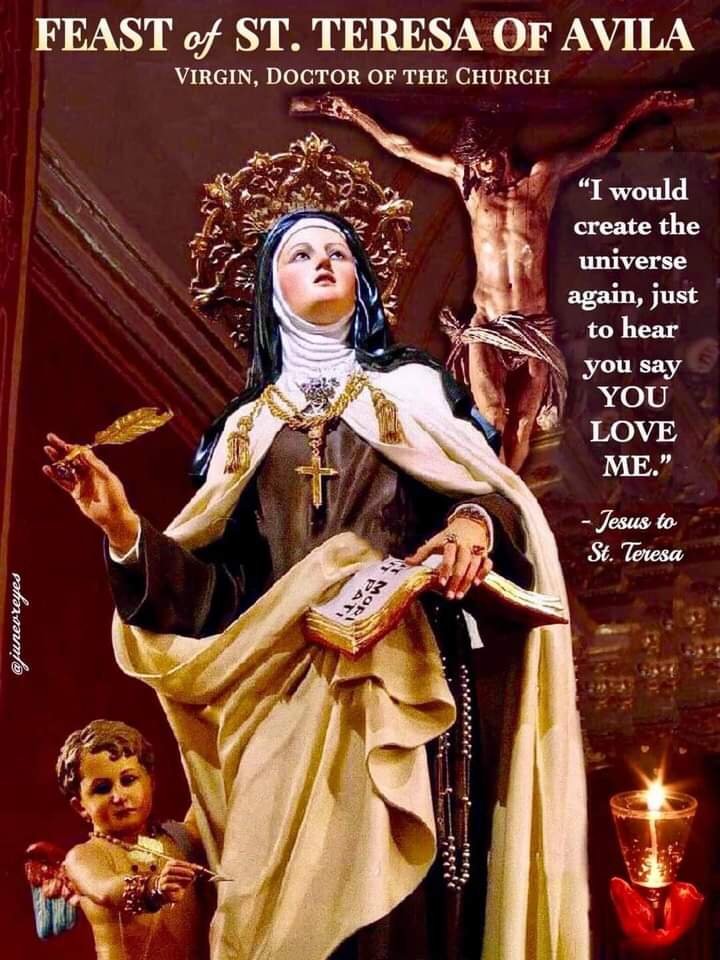
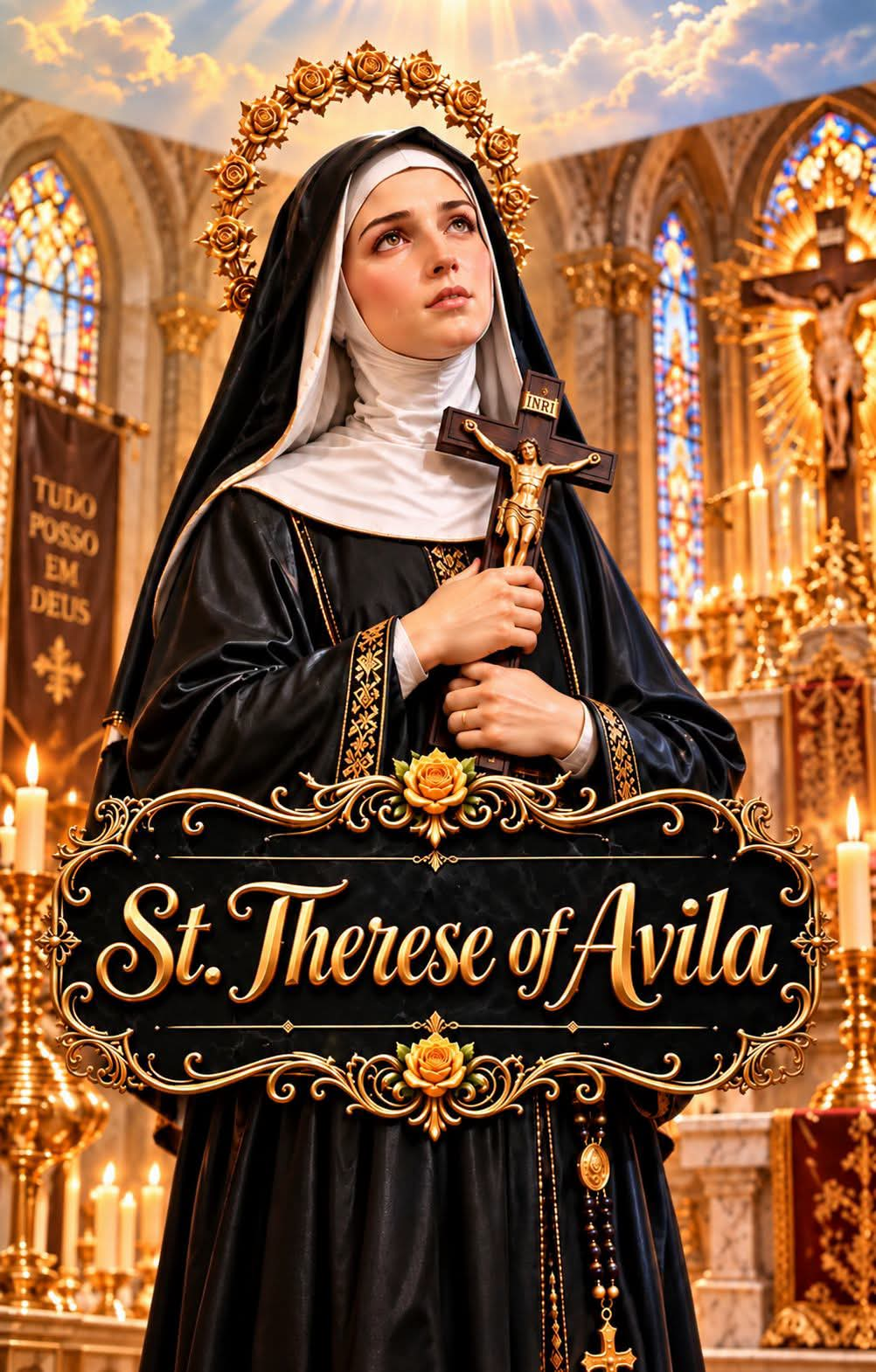
SAINT TERESA OF AVILA
FEAST DAY – 15th OCTOBER

Teresa was born in Avila, Spain, on March 28, 1515. Two years after she was born, Luther started the Protestant Reformation.
Out of all of this change came Teresa, who pointed the way from outer turmoil to inner peace. As a little girl in her parents’ rich home, Teresa and her brother Rodrigo loved to read the lives of the saints and martyrs, and felt that the martyrs got to heaven in an easy way.
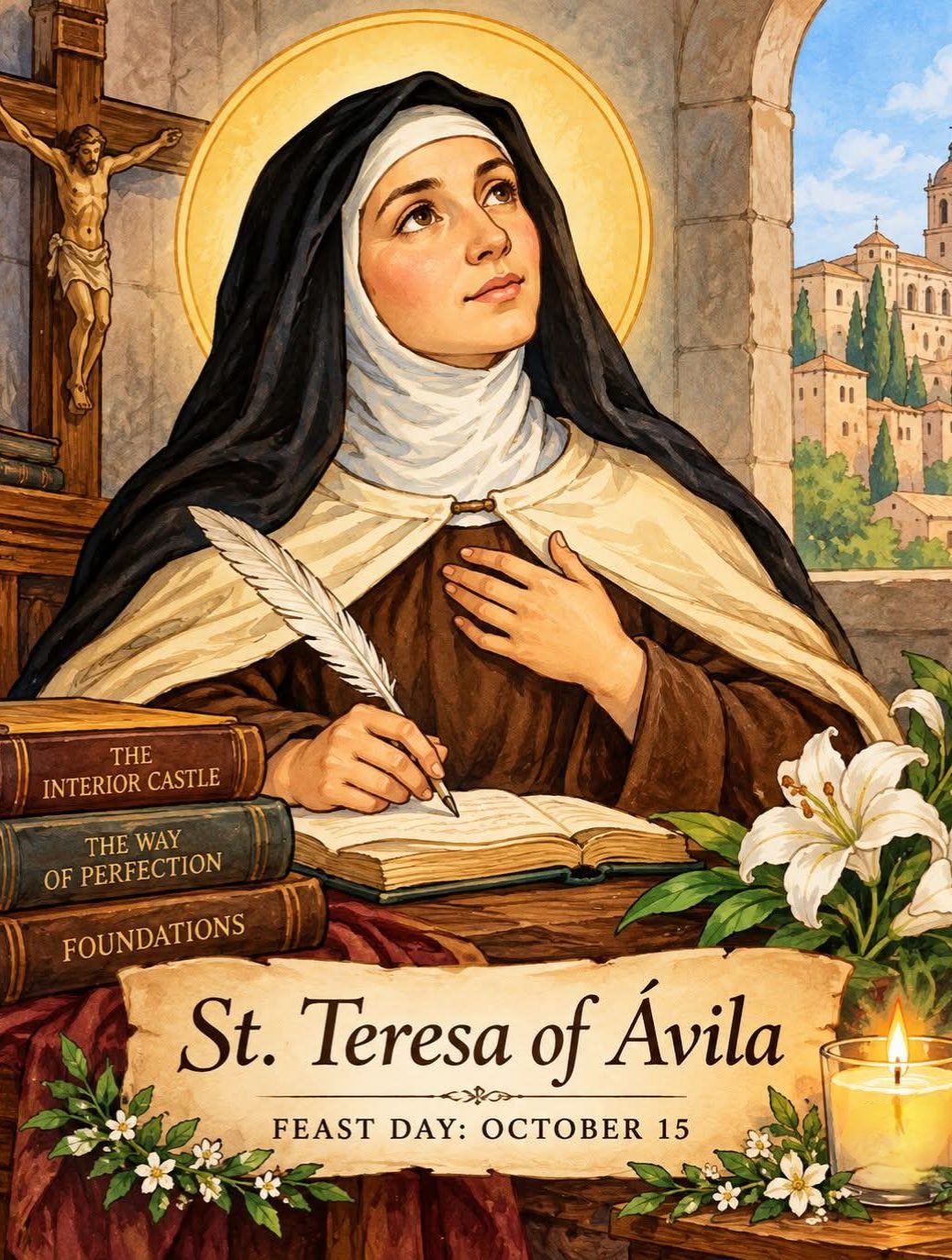
So they set out secretly to the land of the Moors. They walked along, praying that they might die for Christ. Teresa convinced her older brother that they should go off to the land of the Moors.
They should there beg them, out of love of God, to cut off their heads, to achieve martyrdom. They got as far as the road from the city before an uncle found them and brought them back.

Teresa’s father was rigidly honest and pious, carrying his strictness to extremes. Her mother loved romance novels, but because her husband objected to these fanciful books, she hid the books from him. This put Teresa in a dilemma, because her father had taught her never to lie, but her mother told her not to tell her father. Later she said she was afraid that no matter what she did she was going to do it all wrong.
Teresa read so many novels and foolish romances that she lost much of her love for prayer, and began to think more of making herself look pretty. But after she recovered from a bad illness, Teresa read a book about the great St. Jerome. Instantly, she decided to become a bride of Christ. As a nun, Teresa often found it hard to pray, more so, since she had poor health. Teresa wasted time every day in long, foolish conversations. One day, in front of a picture of Jesus, she felt great sorrow that she did not love God more.

She started then to live for Jesus alone, no matter what sacrifice she had to make. In return for her love, the Lord gave St. Teresa the privilege of hearing him talk to her. She learned to pray in a marvelous way, too. St. Teresa of Avila is famous for having opened new Carmelite convents. These convents were filled with sisters who wanted to live holy lives. They made many sacrifices for Jesus. Teresa herself gave them the example. She prayed with great love and worked hard at the convent tasks.
St. Teresa was a great leader and true lover of Jesus and his Church. She died on 4th October, 1582 and was beatified on April 24th 1614, in Rome, by Pope Paul V. Canonized and proclaimed a Saint on March 12th 1622, by Pope Gregory XV in Rome, she was declared a Doctor of the Church by Pope Paul VI in 1970. She is the Patron of Headache sufferers, and Spanish Catholic Writers.

She wrote her autobiography and her writings have made her distinguished as a prolific writer and author. One of her simple yet effective verses is:
Let nothing disturb you,
Let nothing frighten you,
All things are passing away:
God never changes.
Patience obtains all things
Whoever has God lacks nothing;
God alone suffices.
CONTEMPLATING THE LIFE OF SAINT TERESA OF ÁVILA – THE FIRE WITHIN THE WALLS
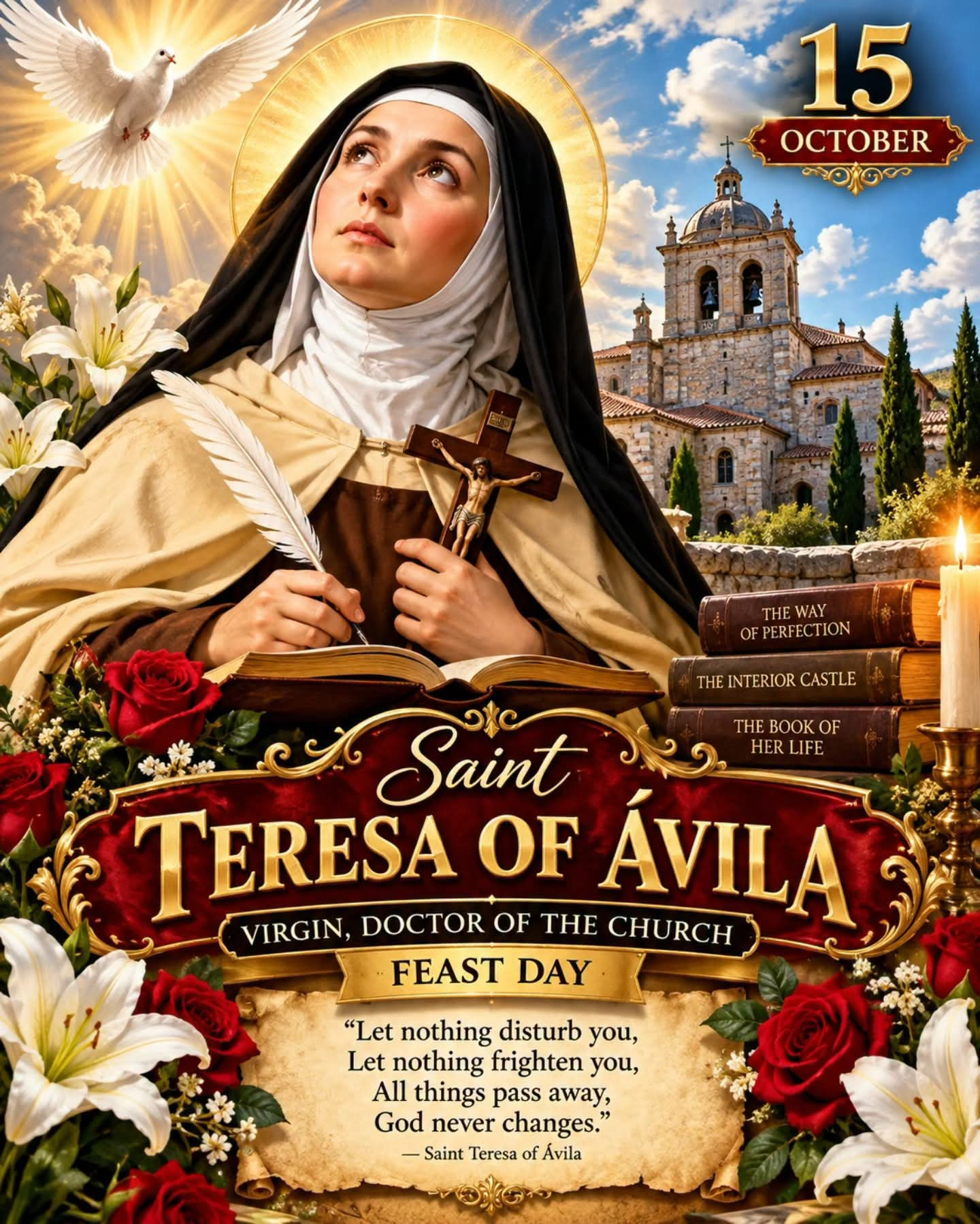
A CHILD WHO LONGED FOR HEAVEN
Teresa Sánchez de Cepeda y Ahumada was born in 1515 in Ávila, Spain, into a deeply religious noble family. Inspired by her parents and the lives of the saints, she developed a passionate longing for God from childhood. Once, she and her brother Rodrigo attempted to travel to Muslim lands to become martyrs for Christ, but their uncle stopped them. Teresa explained that she wanted to see God. In time, she discovered that the true journey to God begins within the soul.
THE SPLENDOR AND SHADOWS OF YOUTH
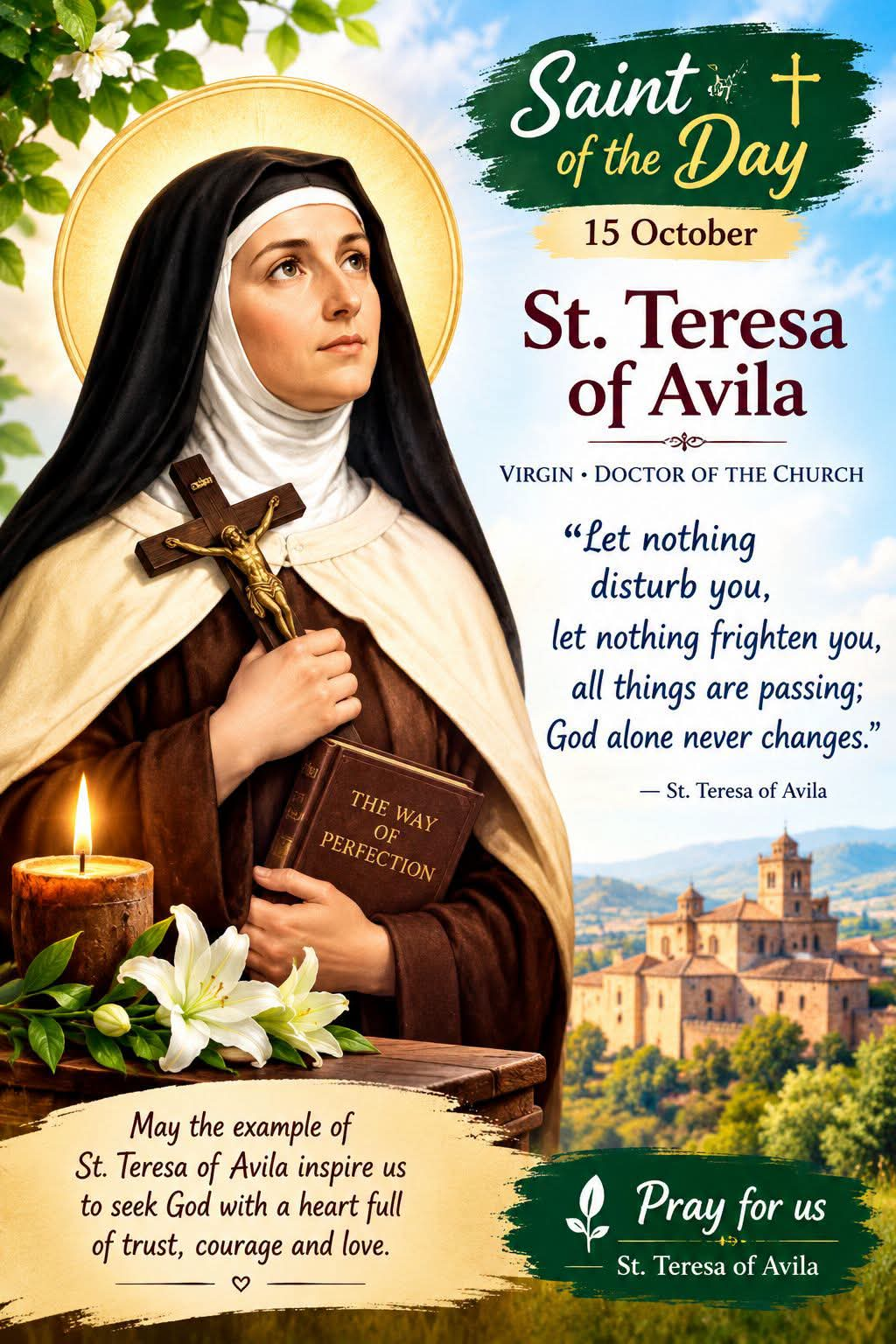
After her mother’s death, Teresa turned to the Blessed Virgin Mary and asked her to be her mother. As she grew older, Teresa enjoyed beautiful clothes, lively conversations, and the admiration of others. She later acknowledged that she had sometimes cared more about being liked than becoming holy. Beneath her charm, however, was a heart searching for a deeper relationship with God.
THE WORLDLY NUN AND THE RELAXED CARMEL
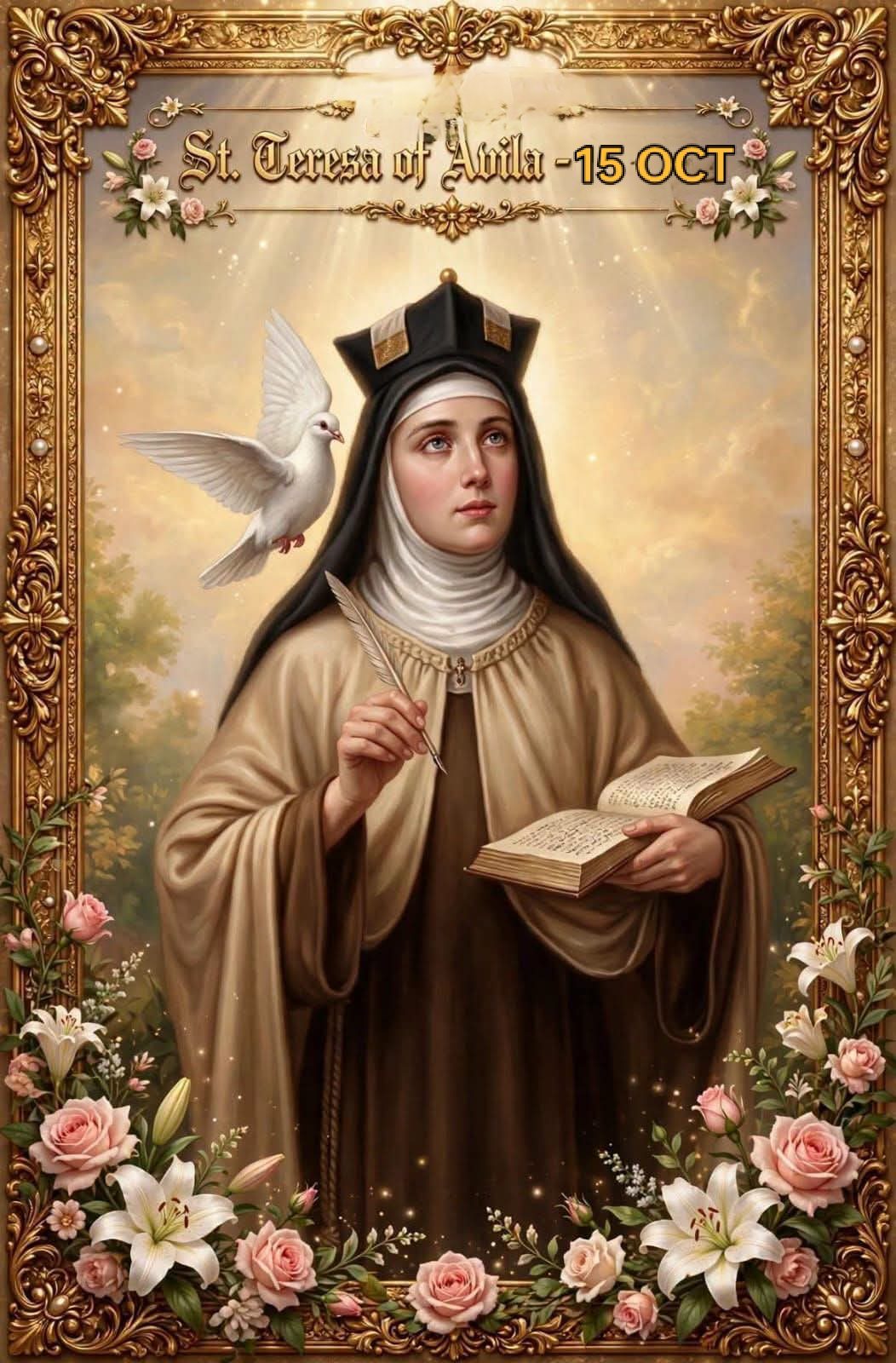
At about twenty, Teresa entered the Carmelite Convent of the Incarnation. The community had gradually relaxed its original discipline of poverty, silence, solitude, and prayer. Teresa enjoyed its social life and visitors, yet struggled with divided loyalties between worldly pleasures and spiritual devotion. This inner conflict eventually helped her understand the need for genuine conversion and wholehearted commitment to God.
ILLNESS, CONVERSION, AND THE RETURN TO GOD
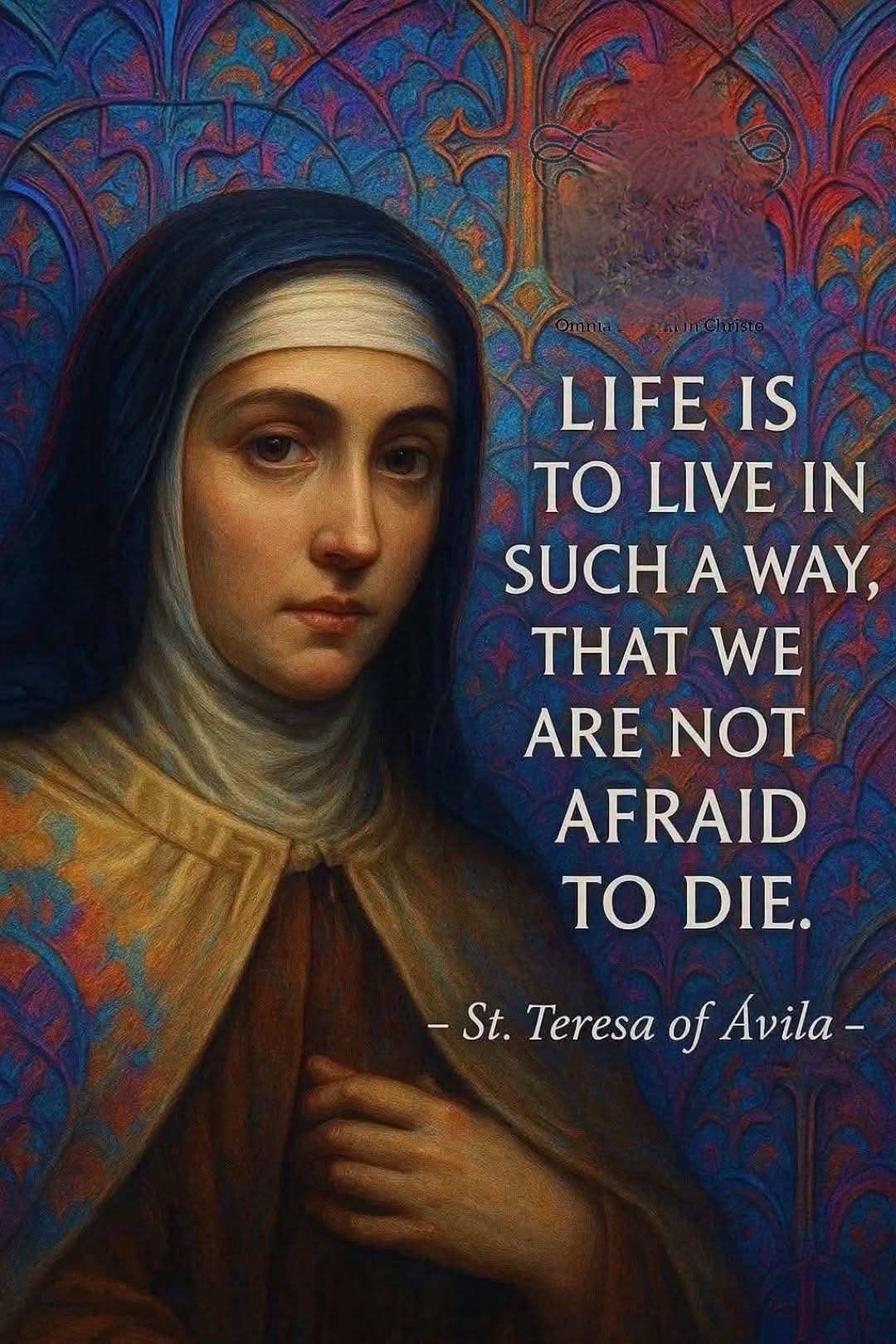
Teresa suffered a severe and mysterious illness that left her helpless for years. Her prolonged suffering became a time of deep spiritual searching. During her recovery, she read the Confessions of Saint Augustine and was moved by his account of conversion. Recognising her own spiritual struggles, she turned more wholeheartedly towards the crucified Christ. Her relationship with God gradually became the centre of her life.
THE MYSTIC’S PRAYER LIFE AND ECSTASIES
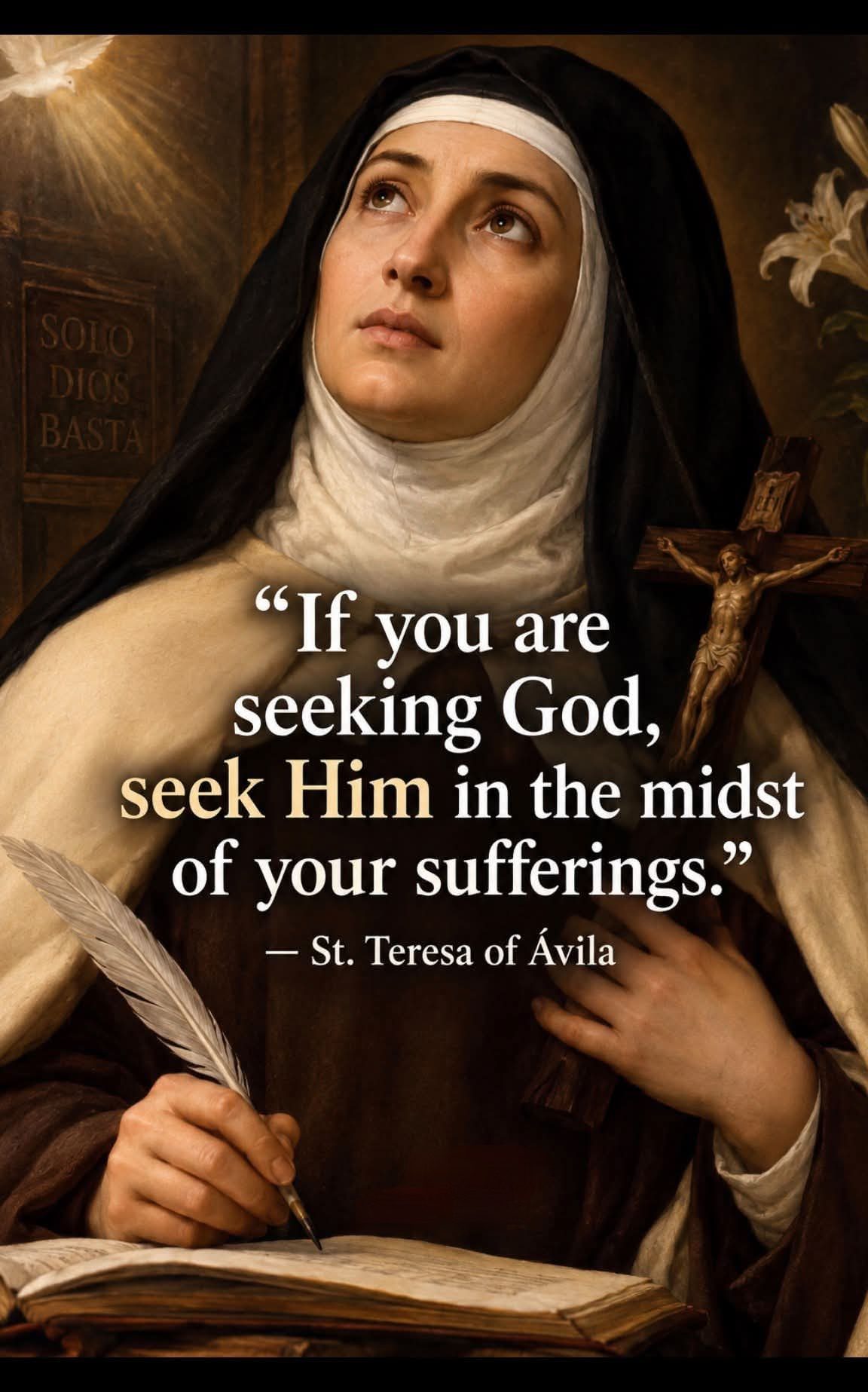
Teresa developed a deep practice of mental prayer, which she understood as a loving conversation with God. Her spiritual journey progressed towards an intimate union with Him. In her writings, especially The Interior Castle, she described the soul’s journey through seven mansions towards perfect communion with God.
During prayer, Teresa experienced visions, spiritual locutions, and profound ecstasies. Her most famous mystical experience was the Transverberation of her heart, in which an angel appeared to pierce her heart with a fiery dart, symbolising her overwhelming love for God. These extraordinary experiences did not make her proud but deepened her humility and devotion to the Church.
THE GREAT CARMELITE REFORM
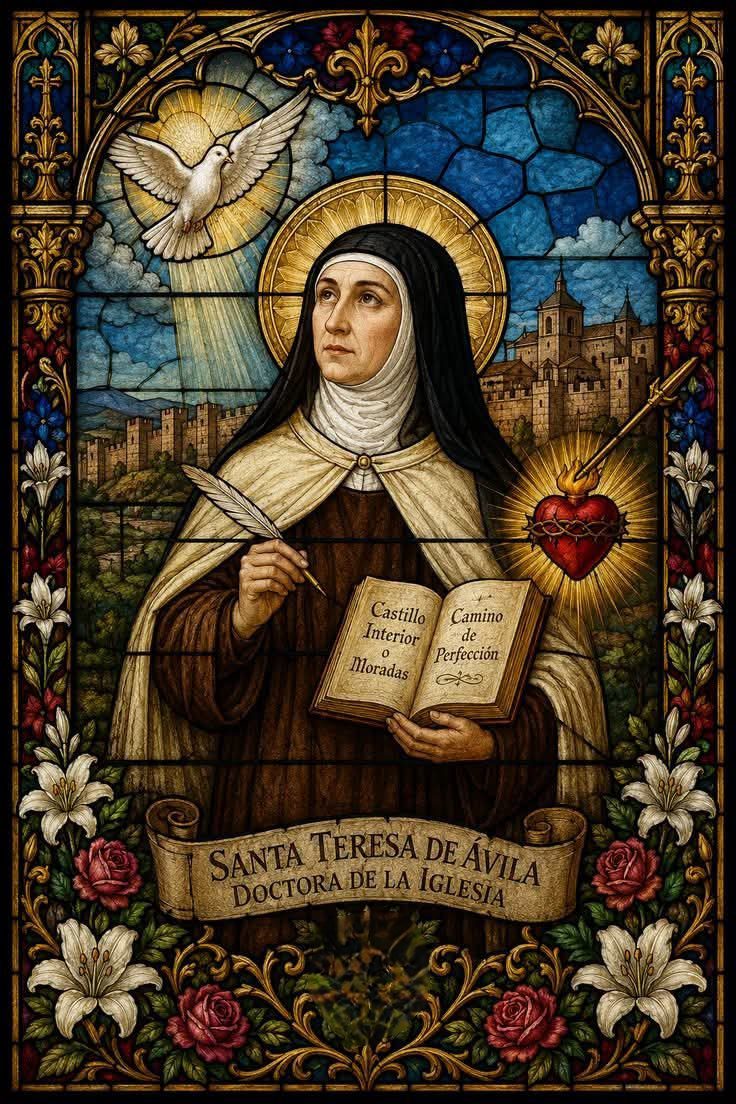
Teresa believed that the Carmelite Order needed to recover its original spirit of poverty, simplicity, silence, and contemplative prayer. In 1562, she founded the convent of Saint Joseph in Ávila, establishing a more disciplined community devoted to prayer and complete trust in God.
Her reforms encountered strong opposition, criticism, and investigations. Nevertheless, she persevered with courage, wisdom, and humour. She eventually founded seventeen convents throughout Spain. With the support of Saint John of the Cross, she also helped reform the men’s branch of Carmel, establishing the Discalced Carmelites.
THE WOMAN OF ACTION AND CONTEMPLATION
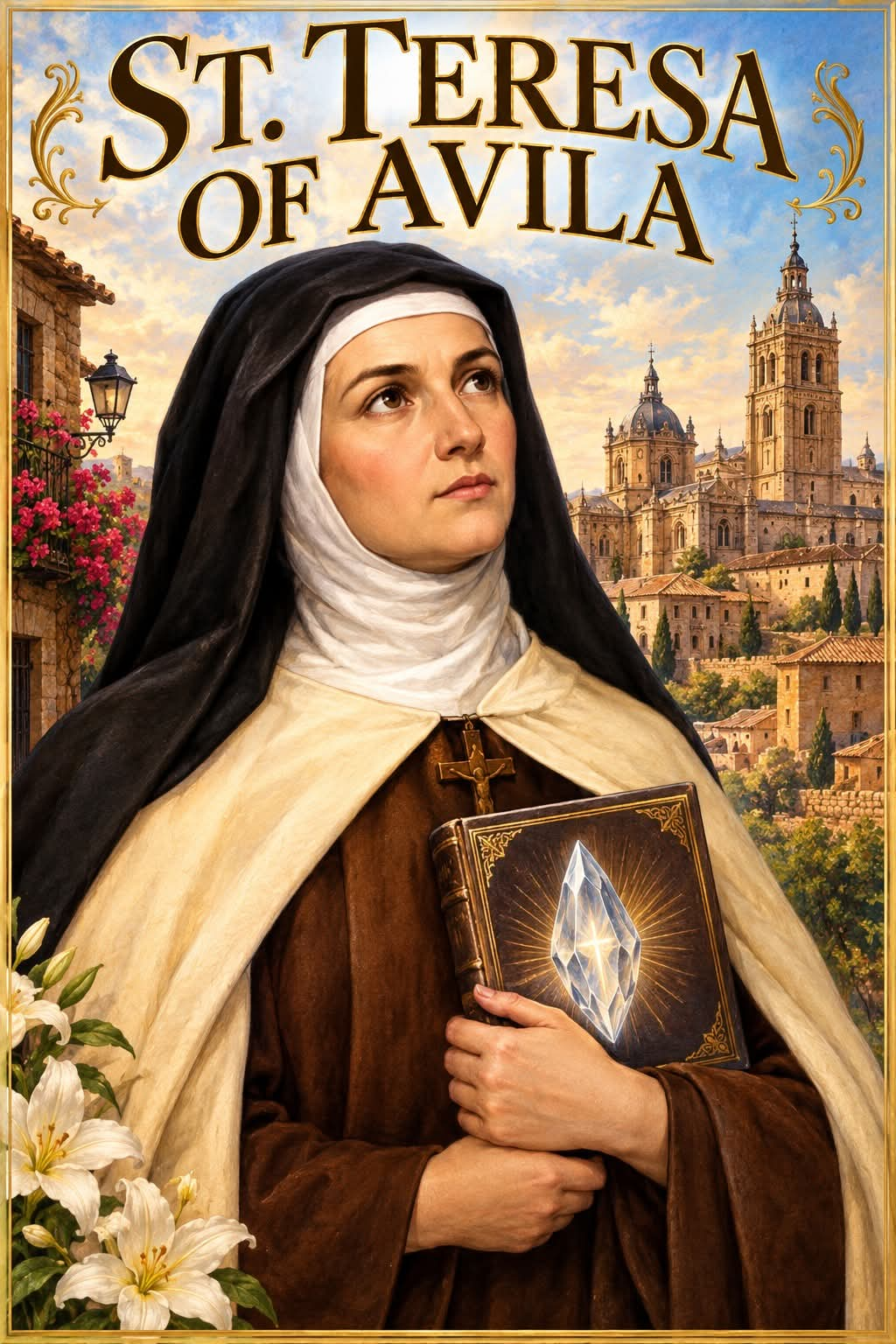
Despite frequent illness and exhaustion, Teresa travelled extensively, founded convents, guided religious communities, and wrote influential spiritual works. She demonstrated that contemplation and action belong together. For Teresa, genuine prayer should transform everyday life and inspire loving service to others.
THE END OF THE JOURNEY
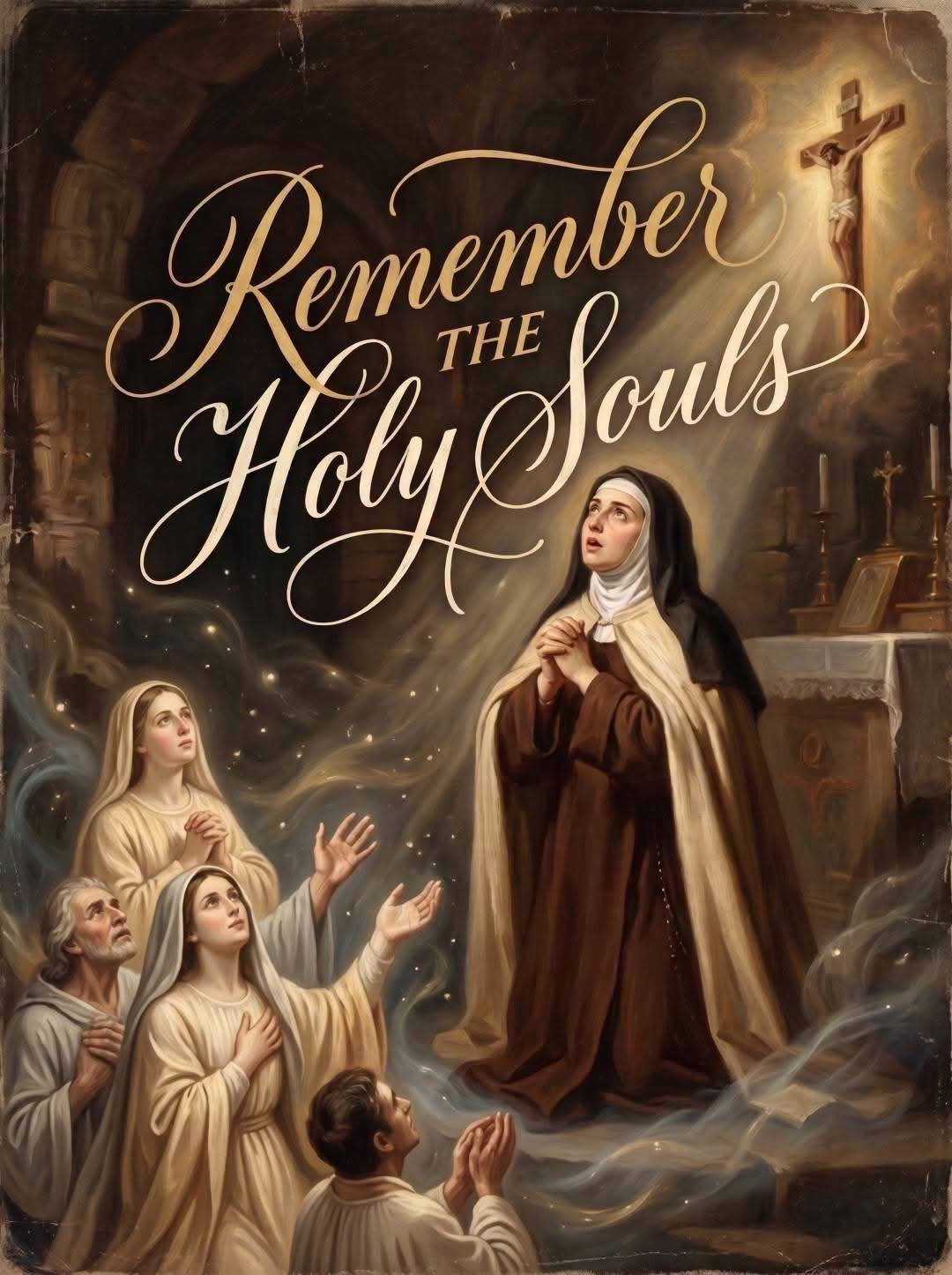
Teresa’s years of tireless labour and illness eventually weakened her body. She died at Alba de Tormes, Spain, on 4 October 1582, during the night that preceded the calendar transition associated with the Gregorian reform. Her life ended in profound faith and devotion to the Church, the community she had served so faithfully.
THE LEGACY OF THE MYSTIC
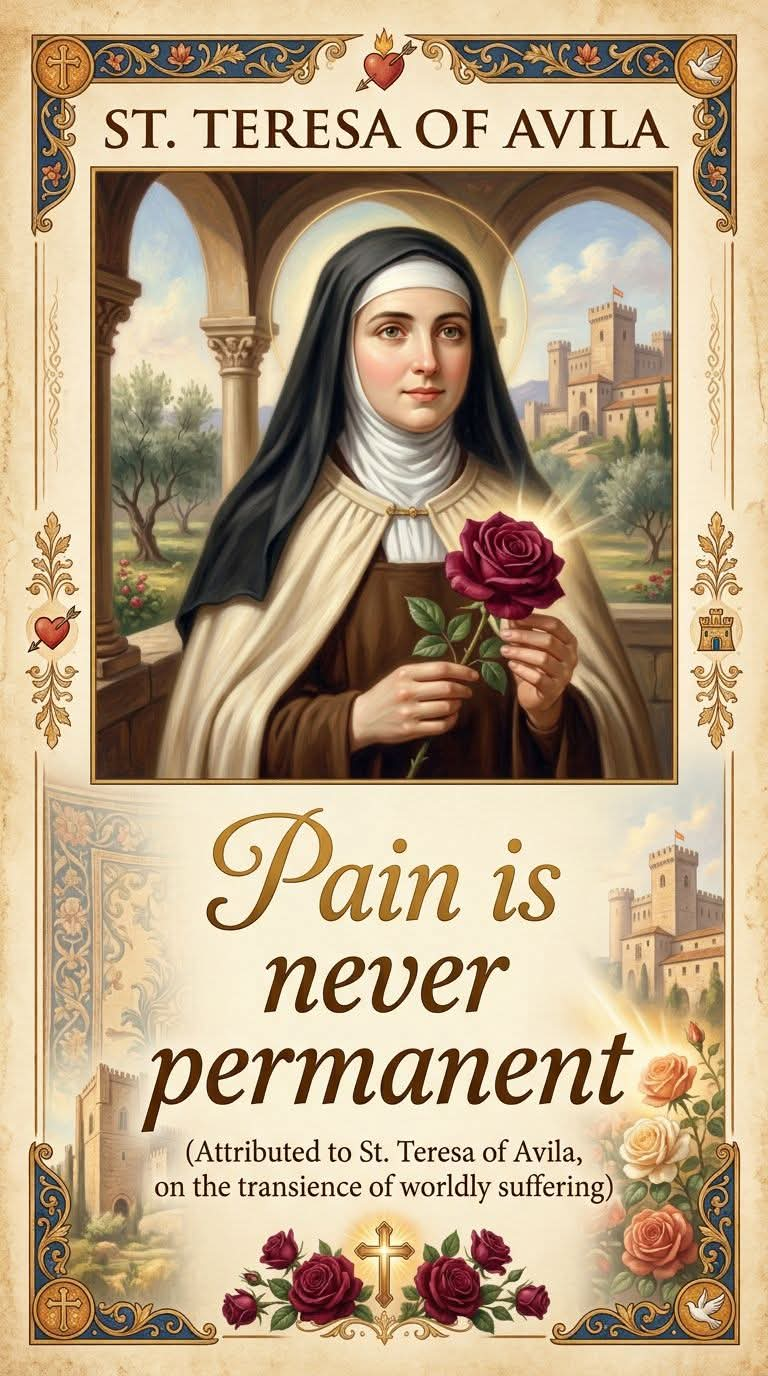
Teresa left behind a remarkable spiritual legacy through her autobiography, The Life, her guide to prayer, The Way of Perfection, and her masterpiece, The Interior Castle. Her writings continue to guide Christians towards deeper prayer, self-knowledge, and union with God.
She was canonised in 1622 alongside Saint Ignatius of Loyola and Saint Francis Xavier. In 1970, Pope Paul VI declared her a Doctor of the Church, recognising her profound contribution to Christian spirituality. Saint Teresa of Ávila remains an enduring example of courageous faith, contemplative prayer, practical wisdom, and wholehearted love for God.

PRAYER
O Saint Teresa, seraphic Virgin, beloved spouse of thy crucified Lord, thou who on earth didst burn with a love so intense toward thy God and my God, and now dost glow with a brighter and purer flame in paradise: obtain for me also, I beseech thee, a spark of that same holy fire which shall cause me to forget the world, all things created, and even myself; for thou didst ever avidly desire to see Him loved by all men.
Grant that my every thought and desire and affection may be continually directed to doing the will of God, the supreme Good, whether I am in joy or in pain, for He is worthy to be loved and obeyed forever. Obtain for me this grace, thou who art so powerful with God; may I be all on fire, like thee, with the holy love of God. Amen. (By St Alphonsus de’Liguori)

St Teresa of Avila, Pray for Us.