
AN EFFICACIOUS NOVENA TO THE SACRED HEART OF JESUS
June 3, 2026
Matthew 5:4
June 3, 2026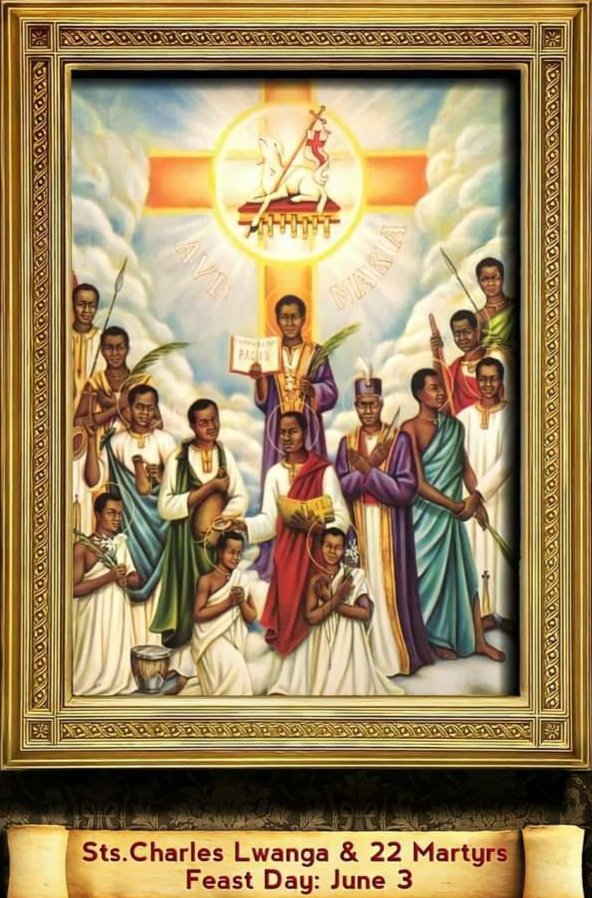
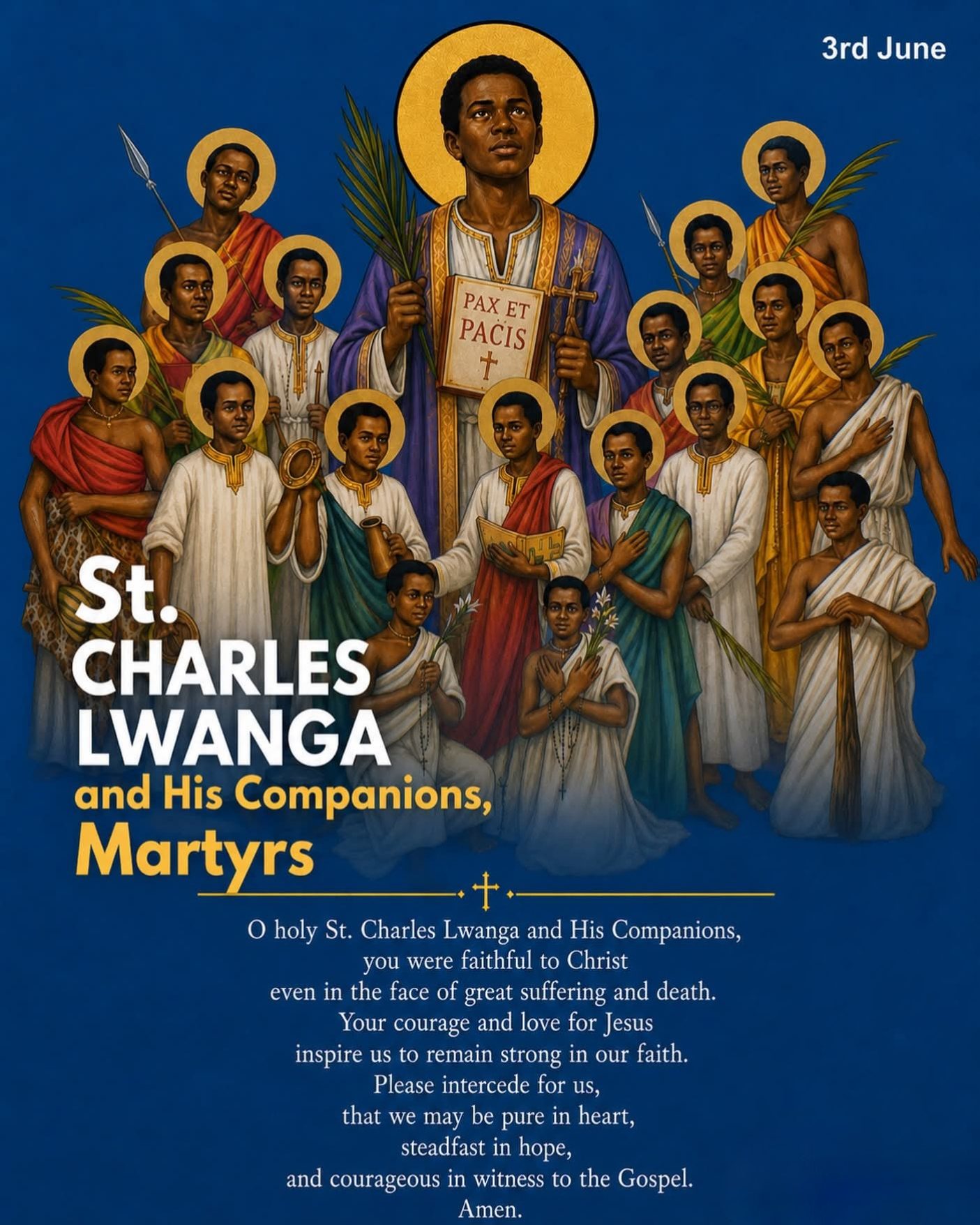
FEAST OF SAINT CHARLES LWANGA AND COMPANIONS, MARTYRS
FEAST DAY – 3rd JUNE
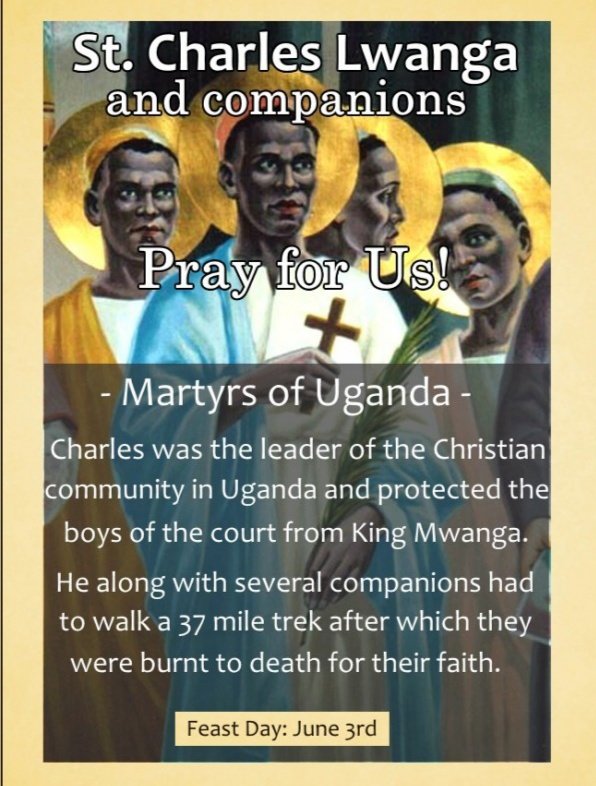
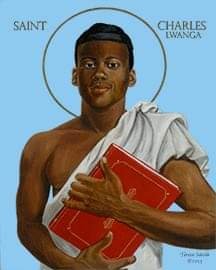
Charles was one of twenty-two Ugandan martyrs who converted from paganism. He was baptized November 1885, a year before his death, and became a moral leader. He was the chief of the royal pages and was considered the strongest athlete of the court. He was also known as “the most handsome man of the Kingdom of the Uganda.”
He instructed his friends in the Catholic Faith and he personally baptized boy pages. He inspired and encouraged his companions to remain chaste and faithful. He protected his companions, ages 13-30, from the immoral acts and homosexual demands of the Babandan ruler, Mwanga.
Mwanga was a superstitious pagan king who originally was tolerant of Catholicism. However, his chief assistant, Katikiro, slowly convinced him that Christians were a threat to his rule. The premise was if these Christians would not bow to him, nor make sacrifices to their pagan god, nor pillage, massacre, nor make war, what would happen if his whole kingdom converted to Catholicism?
Charles and his companions were martyred between November 15, 1885 – January 27, 1887. When Charles was sentenced to death, he seemed very peaceful, one might even say, cheerful. He was to be executed by being burned to death. While the pyre was being prepared, he asked to be untied so that he could arrange the sticks. He then lay down upon them.
When the executioner said that Charles would be burned slowly to death, Charles replied by saying that he was very glad to be dying for the True Faith. He made no cry of pain but just twisted and moaned, “Kotanda! (O my God!).” He was burned to death by Mwanga’s order on June 3, 1886.
The persecution started in 1885 after Mwanga, a ritual pedophile, ordered a massacre of Anglican missionaries, including Bishop James Hannington who was the leader of the Anglican community. Joseph Mukasa, the Catholic major-domo of the court and a lay catechist, reproached the king for the killings, against which he had counseled him.
Mwanga had Balikuddembe beheaded and arrested all of his followers on 15 November 1885. The king then ordered that Lwanga, who was chief page at that time, take up Balikuddembe’s duties. That same day, Lwanga and other pages under his protection sought baptism as Catholics by a missionary priest of the White Fathers, some hundred catechumens were baptized. Lwanga often protected boys in his charge from the king’s sexual advances.
On 25 May 1886, Mwanga ordered a general assembly of the court while they were settled at Munyonyo, where he condemned two of the pages to death. The following morning, Lwanga secretly baptized those of his charges who were still only catechumens. Later that day, the king called a court assembly in which he interrogated all present to see if any would renounce Christianity.
Led by Lwanga, the royal pages declared their fidelity to their religion, upon which the king condemned them to death, directing that they be marched to the traditional place of execution. Three of the prisoners, Pontian Ngondwe, Athanasius Bazzekuketta, and Gonzaga Gonza, were murdered on the march there.
When preparations were completed and the day had come for the execution on 3 June 1886, Lwanga was separated from the others by the Guardian of the Sacred Flame for private execution, in keeping with custom. As he was being burnt, Lwanga said to the Guardian, “It is as if you are pouring water on me. Please repent and become a Christian like me.”
Twelve Catholic boys and men and nine Anglicans were then burnt alive. Another Catholic, Mbaga Tuzinde, was clubbed to death for refusing to renounce Christianity, and his body was thrown into the furnace to be burned along with those of Lwanga and the others. The ire of the king was particularly inflamed against the Christians because they refused to participate in sexual acts with him.
Lwanga, in particular, had protected the pages. The executions were also motivated by Mwanga’s broader efforts to avoid foreign threats to his power. According to Assa Okoth, Mwanga’s overriding preoccupation was for the “integrity of his kingdom”, and perceived that men such as Lwanga were working with foreigners in “poisoning the very roots of his kingdom”. Not to have taken any action could have led to suggestions that he was a weak sovereign.
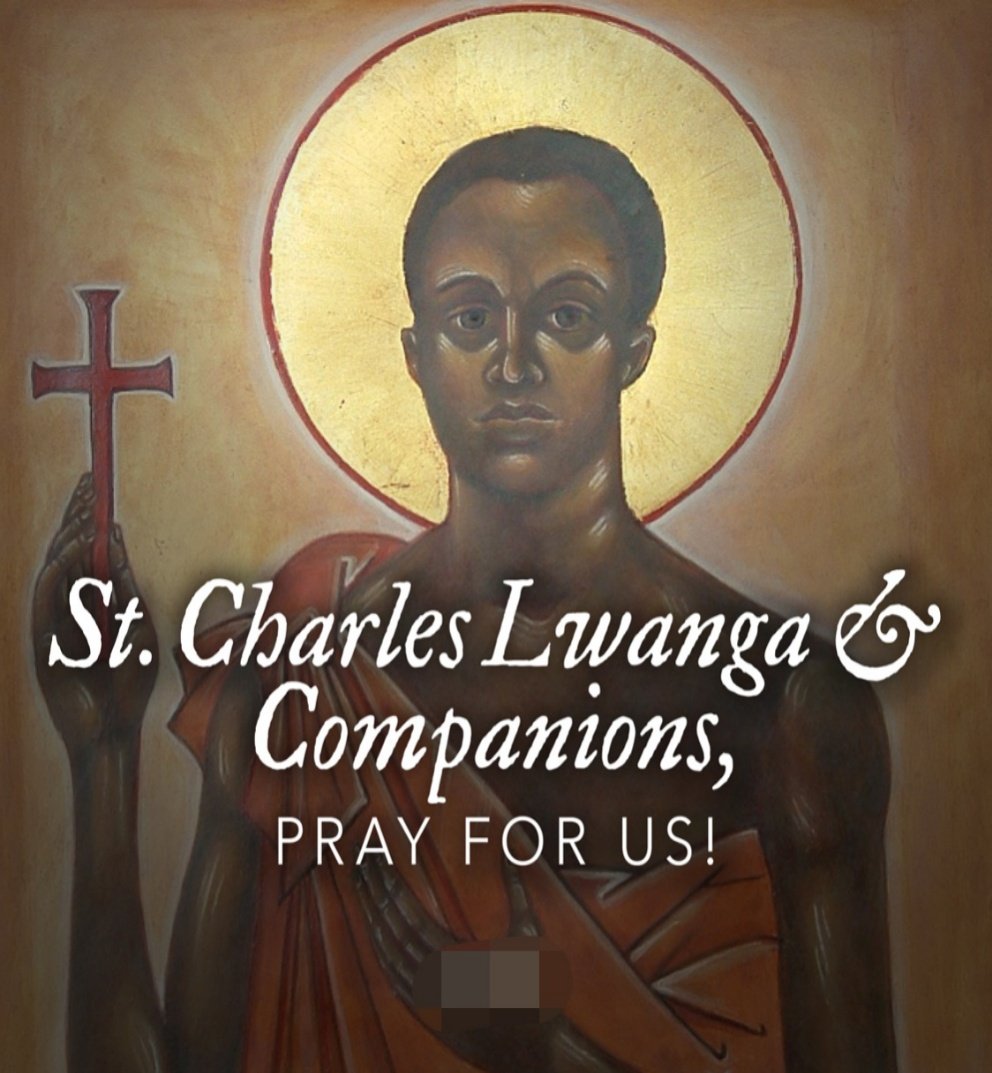
Pope Paul VI canonized Charles Lwanga and his companions on June 22,1964. We celebrate his memorial on June 3rd on the Roman Calendar. Charles is the Patron of the African Youth of Catholic Action.
Excerpts— www.savior.org
CONTEMPLATING THE LIVES OF SAINT CHARLES LWANGA AND THE TWENTY-ONE COMPANIONS – THE MARTYRS OF UGANDA
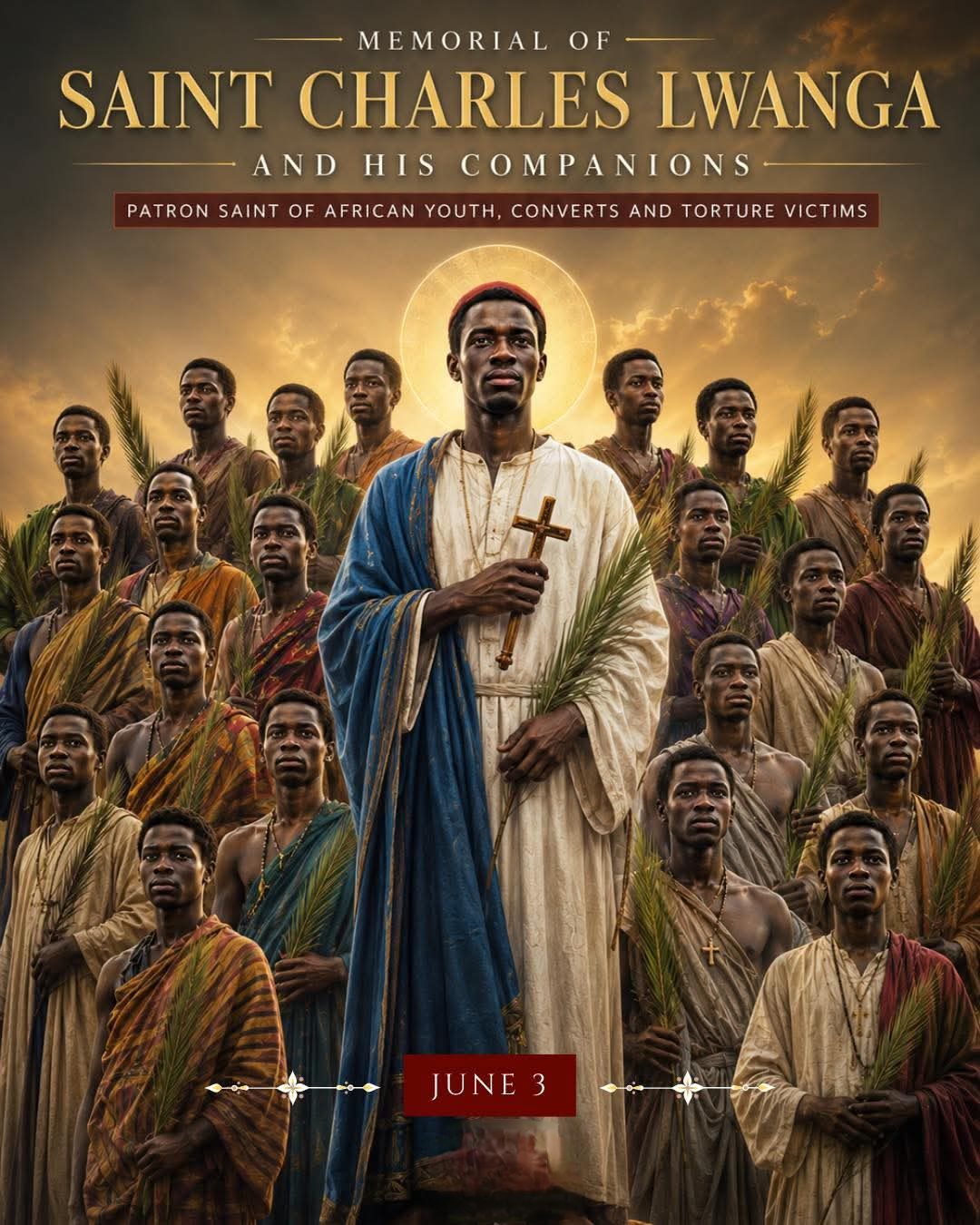
Saint Charles Lwanga and his companions stand among the most inspiring witnesses of Christian faith. Most were young men in their teens or twenties who suffered martyrdom between 1885 and 1887 in the Kingdom of Buganda, present-day Uganda. They are remembered as martyrs, catechists, converts, royal servants, and courageous defenders of Christian faith, purity, and conscience.
Despite their youth and recent conversion, they chose fidelity to Christ over fear, comfort, privilege, and life itself. Today they are honored throughout the world as the Uganda Martyrs.
HISTORICAL BACKGROUND
In the late nineteenth century, Buganda was one of East Africa’s most influential kingdoms. During this period, Catholic missionaries, Protestant missionaries, and Islam entered the region, bringing spiritual renewal along with political tension.
Many young men serving at the royal court embraced Christianity. Their new faith taught them human dignity, moral responsibility, and obedience to God above earthly authority, ideas that often conflicted with existing court practices.
THE YOUNG MEN WHO CHOSE CHRIST OVER A KING
As Christianity spread among the young royal attendants, many discovered a deeper purpose through prayer, faith, forgiveness, purity, and hope in eternal life. Among these converts was Charles Lwanga, whose maturity and strong faith made him a leader among the Christians.
THE KING’S FEAR
King Mwanga II became increasingly suspicious as more young attendants converted to Christianity. He feared foreign influence, loss of control, and challenges to his authority. What troubled him most was that these young believers now recognized a higher authority than the king himself.
THE COST OF PURITY
Historical accounts describe how some young converts refused immoral demands made by the king. Their refusal was rooted in conscience, chastity, and fidelity to Christ. Charles Lwanga became a protector and guide to younger Christians, strengthening them during growing persecution.
THE FIRST WITNESSES
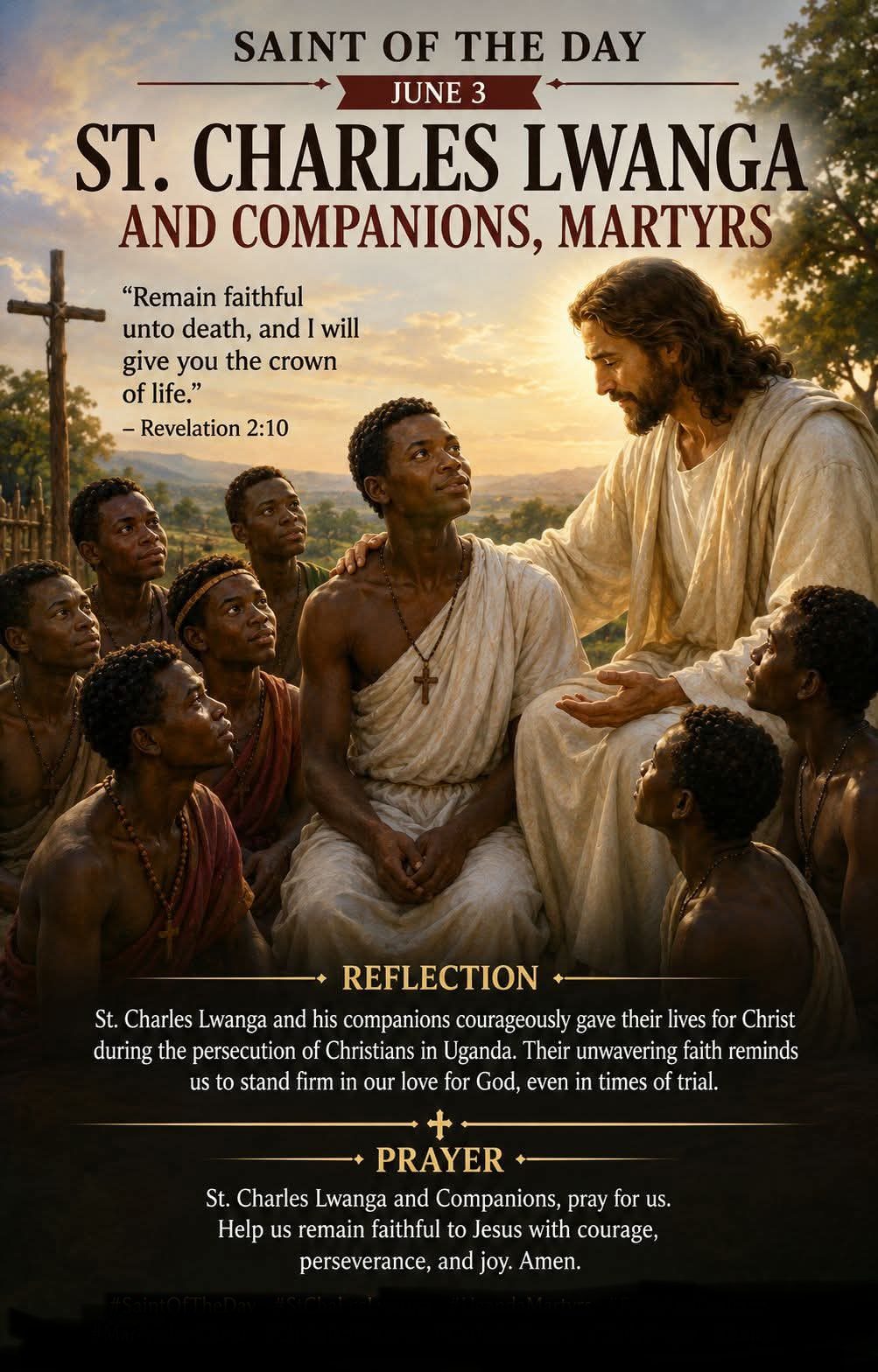
Before Charles’ martyrdom, Christian leader Saint Joseph Mukasa Balikuddembe was executed after speaking against injustice and violence. Rather than weakening the believers, his death strengthened their resolve.
CHARLES THE SPIRITUAL LEADER
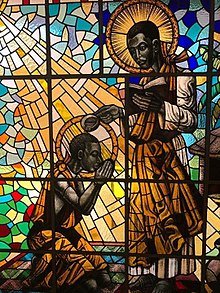
After Joseph’s death, Charles became the spiritual leader of the Christian pages. Tradition holds that he secretly baptized catechumens who feared dying before receiving the sacrament. Knowing persecution was near, he prepared them not only to live for Christ but also to die for Him.
THE ULTIMATUM
King Mwanga demanded that Christians abandon their faith. Faced with the choice between denying Christ or facing death, these young believers chose faith despite having dreams, friendships, and futures ahead of them.
THE ROAD TO NAMUGONGO
The condemned Christians were marched to Namugongo, the place of execution. Along the journey they endured mockery, beatings, and suffering, yet encouraged one another through prayer, hymns, and shared faith.
CHARLES LEADS THE WAY
Charles Lwanga walked beside his companions as a spiritual father. His courage strengthened fearful hearts and transformed suffering into witness.
THE MARTYRDOM
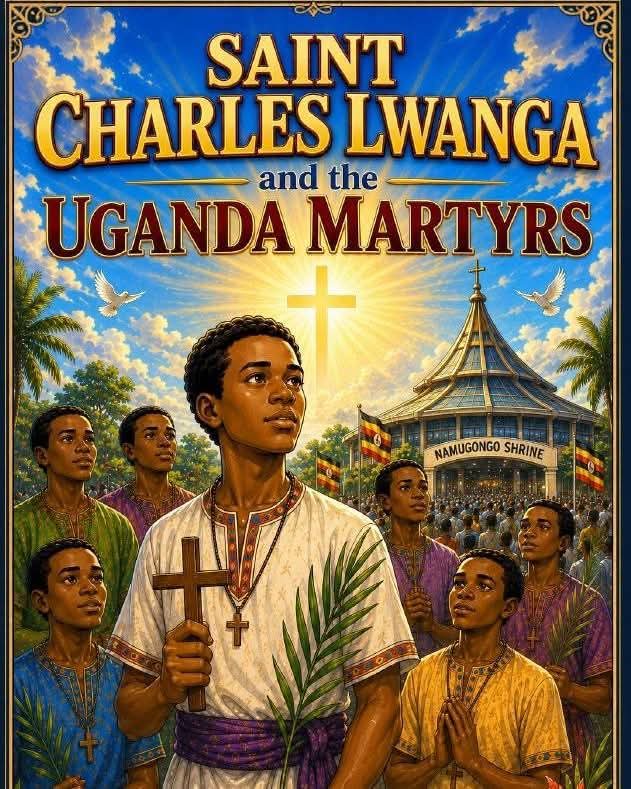
On June 3, 1886, Charles Lwanga and many companions were burned alive. Their persecutors expected fear but witnessed extraordinary courage. The attempt to destroy Christianity instead produced martyrs whose witness spread far beyond their deaths.
THE HARVEST OF FAITH
Their sacrifice strengthened Christianity throughout Uganda. Conversions increased rapidly, and the Church flourished. Their witness helped establish one of Africa’s strongest Christian communities.
THE YOUNG SAINTS WHO STILL INSPIRE
Millions of pilgrims visit Namugongo each year, especially on June 3, to honor these martyrs. Their lives remind believers that holiness is not limited by age and that courage, truth, and faith can overcome fear.
BEATIFICATION AND CANONIZATION
The Uganda Martyrs were beatified by Pope Benedict XV in 1920 and canonized by Pope Paul VI in 1964 during the Second Vatican Council, highlighting the growing importance of Christianity in Africa.
PILGRIMAGE SITE OF NAMUGONGO
Uganda Martyrs Shrine at Namugongo remains one of Africa’s most important pilgrimage destinations and stands as a symbol of courage, youthful holiness, faith, and Christian witness.
SPIRITUAL THEMES IN THEIR LIVES
FIDELITY TO CHRIST ABOVE HUMAN AUTHORITY
They remained obedient to God even when earthly power demanded compromise.
PURITY AND CHASTITY
They defended moral integrity despite enormous personal cost.
COURAGE OF YOUTH
Their lives show that holiness is possible at every age.
STRENGTH THROUGH COMMUNITY
They encouraged one another and faced suffering together.
PATRONAGE
The Uganda Martyrs are associated with youth, catechists, converts, courage, chastity, and Christian witness. Saint Charles Lwanga is especially regarded as a patron of African Catholic youth, Catholic Action movements, and those striving for purity.
ARTISTIC REPRESENTATION
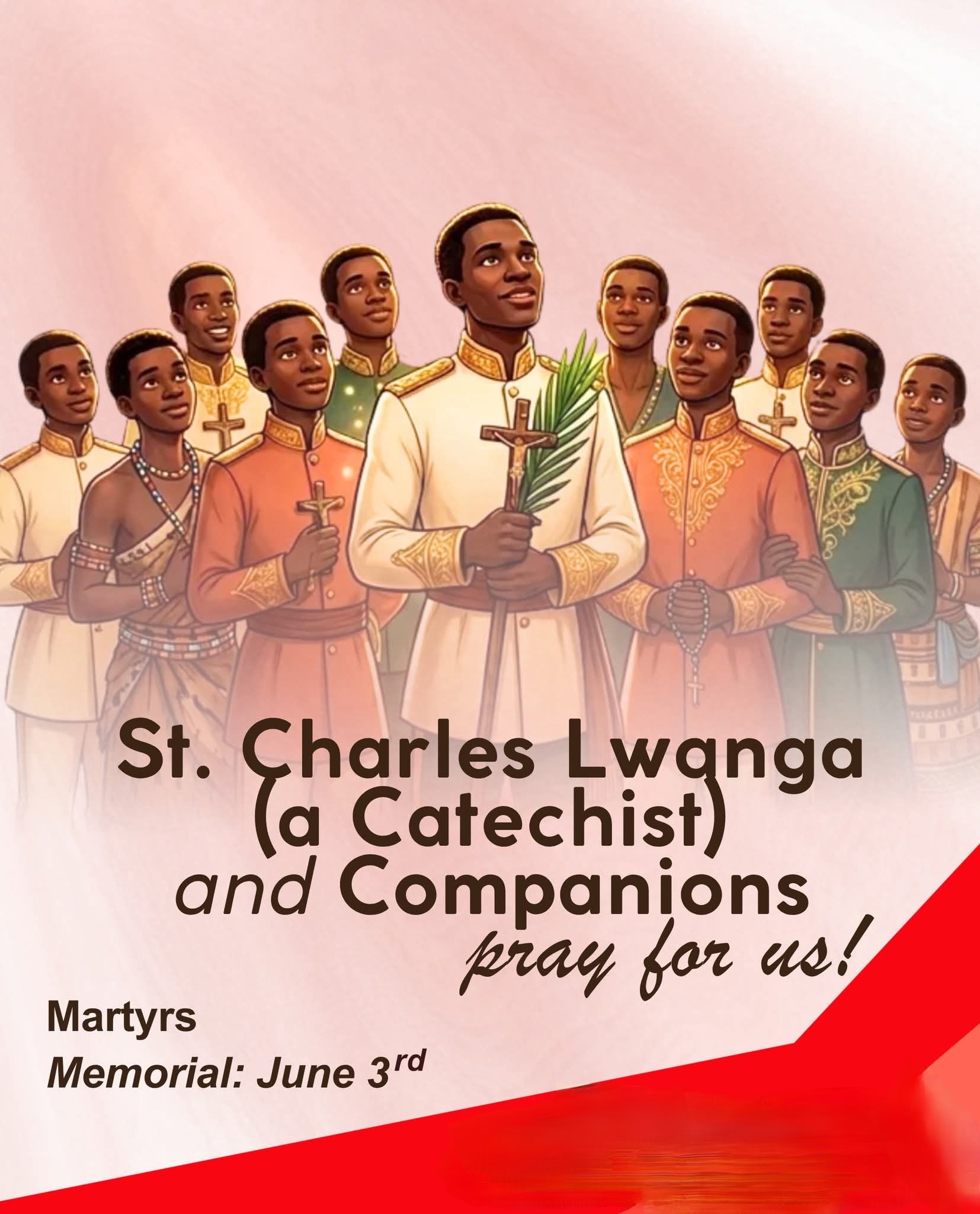
They are commonly portrayed in traditional Bugandan clothing, carrying palms of martyrdom, surrounded by flames, and gathered together as a community of witnesses, often with Charles leading them.
WHY THEY STILL MATTER
Their witness speaks powerfully today because it shows that faith can endure pressure, conscience remains sacred, integrity deserves protection, and courage grows through community.
THEIR ENDURING MESSAGE
The Uganda Martyrs faced authority, suffering, humiliation, and death, yet remained faithful to Christ. Earthly power could not overcome hearts fully given to God. Their witness continues to inspire millions and proclaims an enduring truth: no earthly power can conquer a heart that belongs completely to God.
PRAYER
O God, who have made the blood of Martyrs the seed of Christians, mercifully grant that the field which is your Church, watered by the blood shed by Saint Charles Lwanga and his companions, may be fertile and always yield you an abundant harvest.
Through our Lord Jesus Christ, your Son, who lives and reigns with you in the unity of the Holy Spirit, one God, for ever and ever. Amen