
TODAY’S GOSPEL READING – 11 SEPTEMBER
September 11, 2026
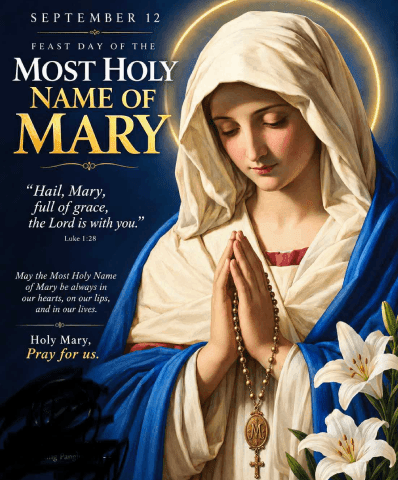
FEAST OF THE MOST HOLY NAME OF THE BLESSED VIRGIN MARY – 12th SEPTEMBER
September 12, 2026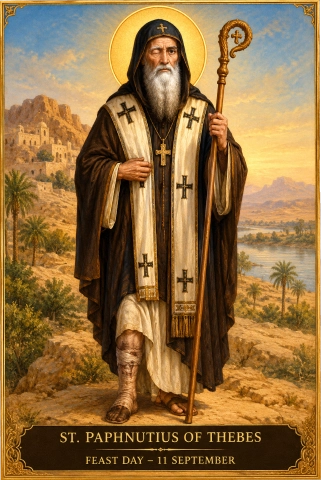
HIS WOUNDED BODY BECAME A TESTIMONY
“Always carrying in the body the death of Jesus, so that the life of Jesus may also be manifested in our bodies.”
— 2 Corinthians 4:10
Tradition tells us that Paphnutius suffered severe physical wounds during persecution, including the loss of an eye and injury to a leg. His damaged body became a testimony to the faith he refused to abandon. His wounds were not signs of God’s absence but reminders of his steadfast love for Christ.
HIS LOST EYE DID NOT DIM HIS SPIRITUAL VISION
“We walk by faith, not by sight.”
— 2 Corinthians 5:7
According to tradition, Paphnutius lost an eye during persecution. Though his physical sight was diminished, his spiritual vision became clearer. His suffering helped him recognize that eternal treasures are more valuable than the things of this world.
HIS WOUNDED LEG DID NOT PREVENT HIM FROM STANDING FOR CHRIST
“Be steadfast, immovable, always excelling in the work of the Lord.”
— 1 Corinthians 15:58
The persecution left Paphnutius physically impaired, yet he remained spiritually steadfast. He continued to serve Christ and became a faithful bishop. His life teaches us that even when circumstances weaken us, our hearts can remain firmly rooted in God.
HIS SCARS BECAME HIS CREDENTIALS
“Let no one cause me trouble, for I carry the marks of Jesus branded on my body.”
— Galatians 6:17
Paphnutius did not need impressive words to prove his fidelity to Christ. The wounds he carried from persecution bore witness to his courage and faithfulness. His scars became a visible testimony that he had remained faithful through suffering.
FAITHFULNESS CONTINUES AFTER PERSECUTION
“Stand firm in the faith; be courageous; be strong.”
— 1 Corinthians 16:13
After the persecution ended, Paphnutius continued to serve the Church and was remembered as a defender of the faith. The challenges did not disappear when persecution ceased. His life shows that Christians must remain faithful not only in suffering but also amid confusion and controversy.
SUFFERING CAN DEEPEN FAITH
“We know that suffering produces endurance, and endurance produces character, and character produces hope.”
— Romans 5:3–4
Paphnutius could have allowed his sufferings to make him bitter, yet tradition remembers him as a faithful bishop who continued serving Christ. His example reminds us that suffering, when surrendered to God, can become a path to deeper faith and holiness.
SURVIVING CAN BECOME WITNESS
“Encourage one another and build up each other.”
— 1 Thessalonians 5:11
Paphnutius did more than survive persecution. He carried the witness of his suffering into the life of the Church and remained faithful in his ministry. What he endured became a testimony that could strengthen others in their own trials.
A HUMBLE LIFE CAN STILL BE FRUITFUL
“Your Father who sees in secret will reward you.”
— Matthew 6:4
Much of Paphnutius’s life is known through tradition, reminding us that holiness does not depend upon fame or recognition. His witness came through what he endured and how faithfully he continued to serve Christ. God values hidden faithfulness more than worldly publicity.
THE GREATEST VICTORY WAS REMAINING CLOSE TO CHRIST
“Who will separate us from the love of Christ? Will hardship, or distress, or persecution?”
— Romans 8:35
Paphnutius did not receive an untouched body or an easy life. His deeper victory was remaining united to Christ despite suffering. His life reminds us that the greatest triumph is not always the removal of the cross, but the grace to carry it without allowing it to separate us from God.
PRAYER THROUGH THE INTERCESSION OF ST. PAPHNUTIUS
St. Paphnutius, wounded witness of Christ, you endured suffering without allowing it to conquer your faith. When I am wounded by disappointment, rejection, failure or hardship, teach me not to become bitter.
When I cannot see clearly, help me to see with the eyes of faith. When I feel weak and unable to move forward, help me to stand firmly in Christ.
Obtain for me the grace to remain faithful when my faith is tested, gentle when others are difficult, wise when confusion surrounds me, and courageous when truth demands a witness.
May the wounds of my life never become reasons to abandon God, but places where His grace can shine.
St. Paphnutius, faithful confessor of Christ, pray for me. Amen.